Have you received a Request for Evidence (RFE) from USCIS?
Many applicants encounter this step during their immigration journey.
An RFE isn’t necessarily a setback—it’s an opportunity to strengthen your application and provide the missing information that USCIS needs to make a decision.
In some cases, like self-petition filings for certain visas, an RFE is simply part of the process and not a sign of denial.
What Is A Request For Evidence (RFE)?
A Request for Evidence (RFE) is an official notice from U.S. Citizenship and Immigration Services (USCIS) asking for missing or insufficient information in your application or petition.
Instead of denying your case outright, USCIS is giving you a chance to provide the additional evidence they need.
This applies to a variety of forms, from USCIS requests for evidence I-130 and I-485 to situations where a request for additional evidence was sent for I-129.
If you ever need to check form instructions or updates, the official USCIS site is your most reliable source.
Why Did You Receive A Request For Evidence?
Getting a Request for Evidence from USCIS can be stressful, but it usually comes down to a few common reasons. Understanding these can help you respond effectively and avoid delays.
1. Insufficient Evidence
USCIS may feel that your application doesn’t fully demonstrate eligibility.
For example, if you claim certain accomplishments or qualifications but don’t provide supporting documents, your evidence may seem weak.
They expect proof like official records, letters from authorities, or clear documentation showing how you meet the criteria.
This is especially important in cases like a USCIS request for evidence (I-130) or a USCIS request for evidence (I-485).
2. Generic Or Unclear Recommendation Letters
Letters that sound templated or vague won’t convince USCIS. A statement like “Applicant is excellent” isn’t enough.
Instead, include specific examples, accomplishments, or outcomes. This helps strengthen your RFE response and shows real impact.
3. Incomplete Or Inconsistent Documentation
If your application mentions multiple achievements, but you provide only partial proof, USCIS may flag it.
For example, claiming participation in several conferences but submitting evidence for only one can trigger a Request for Evidence (RFE) or a Request for Additional Evidence (RFA).
Consistency matters—your documents should fully support every claim in your application.
4. Missing Impact Or Outcome Metrics
Applications that lack measurable results or concrete outcomes can appear unconvincing.
USCIS wants to see the real-world impact of your work, whether it’s citations, patents, program implementations, or endorsements from organizations.
Including clear metrics and documented outcomes makes your Request for Evidence to USCIS much stronger and increases your chances of approval.

How To Avoid A Request For Evidence (RFE)?
No one wants to see that dreaded Request for Evidence in their mailbox. The good news is, you can take steps to minimize the chances of getting one.
1. Read Instructions Carefully
Before submitting any application, such as an I-130 or I-485, make sure you understand all requirements.
USCIS notices are strict—missing a single document or forgetting a signature can trigger an RFE. Take the time to go through the form instructions line by line.
2. Provide Complete And Accurate Documentation
Incomplete evidence is the most common reason for an RFE.
Include everything that proves your eligibility, such as marriage certificates for I-130 petitions, proof of lawful entry for I-485, or supporting documents for an I-129 petition.
Those navigating the PERM labor certification process need to ensure that recruitment reports, job postings, and prevailing wage determinations are accurate and up to date.
This is especially important in cases involving employer sponsorship, where USCIS will expect extensive documentation to verify the legitimacy of the job offer and the applicant’s qualifications.
3. Organize Your Evidence Clearly
Even if you have all the required documents, a messy submission can confuse USCIS officers. Use tabs, labels, and a cover letter explaining each section.
For applicants applying under categories such as EB-2 NIW for Engineers, a clear organization of your portfolio and evidence can make a big difference in USCIS’s evaluation.
You can also check the USA for official guidelines.
4. Use the Most Current Forms
USCIS updates forms regularly.
Using an outdated form can automatically trigger an RFE. Always download the latest version from the official USCIS website.
5. Seek Professional Guidance When Needed
Immigration law can be complicated.
Consulting an attorney or accredited representative can help you identify potential gaps in your application and avoid common mistakes that lead to a Request for Additional Evidence.
6. Double-Check For Consistency
Inconsistencies between documents or statements can raise red flags.
Make sure names, dates, and other details match across forms and supporting evidence.
This is especially important if you’re submitting multiple petitions or adjusting status with an I-485.
When you follow these steps, you can reduce the likelihood of receiving a Request for Evidence and keep your application moving smoothly.
How Should I Respond To An Request For Evidence (RFE)?
Receiving a Request for Evidence can feel stressful, but it’s actually an opportunity to strengthen your case.
If your RFE is connected to an EB-1A Visa or a similar high-skill category, ensure that your evidence clearly and verifiably demonstrates your achievements.
1. Read The RFE Carefully
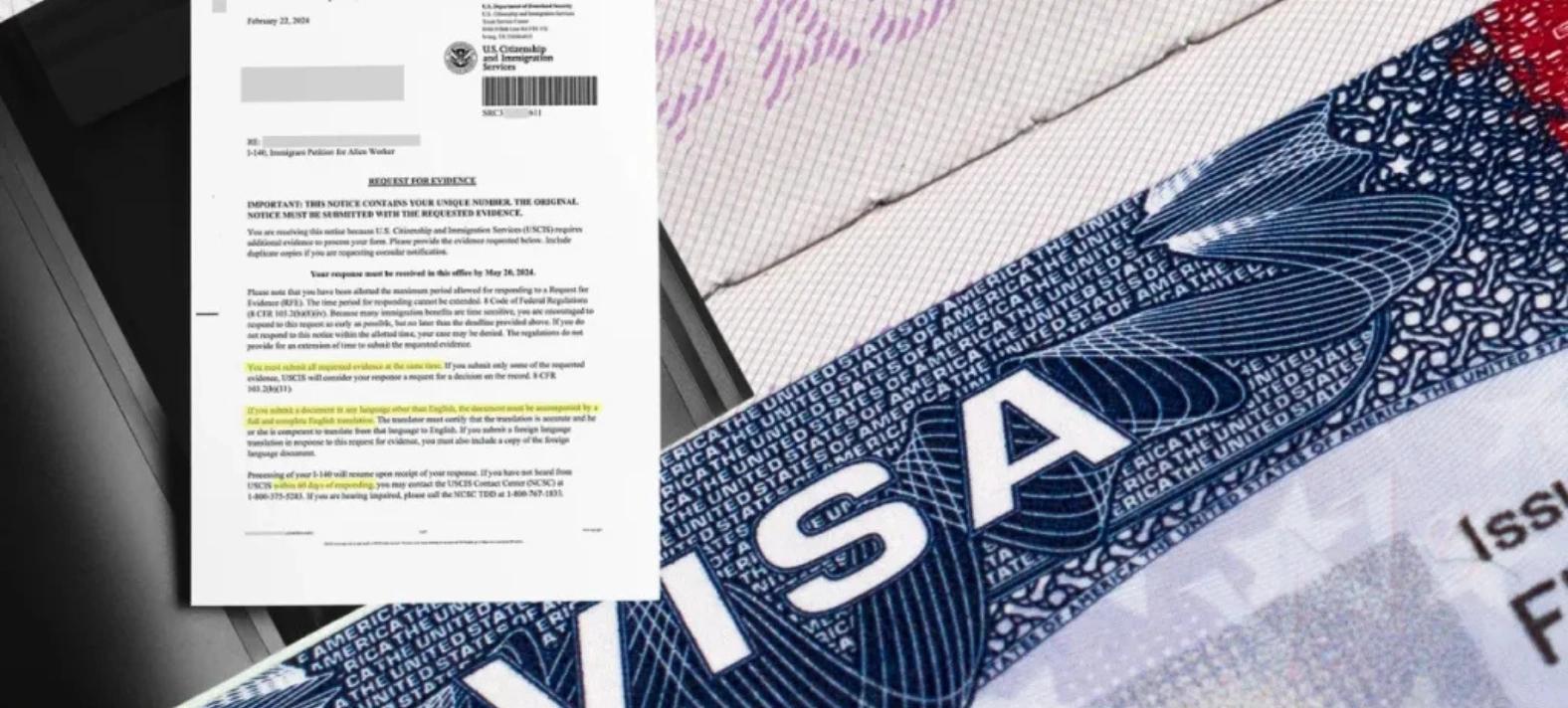
Before you do anything, read the notice from USCIS thoroughly. It will outline exactly what documents or information are missing. Pay attention to deadlines—USCIS usually gives 30 to 90 days to respond. Missing the deadline can result in a denial.
2. Gather The Request For Evidence (RFE)
Collect all the documents USCIS asks for. If your RFE is for I-130, this might include updated proof of your relationship.
For I-485, you may need medical exams, financial documents, or additional identification.
Applicants moving from H-1 B to green card status should be prepared to provide complete employment history, tax records, and proof of lawful status when responding to an RFE.
For certain employment-based cases, you might also benefit from Premium Processing to speed up USCIS review after responding to your RFE.
You can find timelines and requirements on Immigration Equality’s website.
3. Organize Your Response
Clearly label each piece of evidence and reference the specific item in the RFE.
Including a cover letter explaining what you are submitting and how it addresses USCIS’s request can make your response easier to review.
4. Check For Completeness And Accuracy
Double-check that all documents are accurate, consistent, and complete. Make sure names, dates, and other details match across all forms and evidence.
This helps prevent a follow-up USCIS request for evidence, an I-485 request, or additional requests.
5. Submit Within The Deadline
Timeliness is critical. Send your response so it reaches USCIS before the deadline specified in your RFE.
Late submissions can result in your application being denied, even if you provide all the right evidence.
6. Keep Copies Of Everything
Always keep copies of your entire response package for your records. If anything gets lost or misfiled, you’ll have proof of what was submitted.
7. Confirm Receipt If Possible
If USCIS acknowledges your submission, like with “we received your response to our request for evidence for your form I-485,” keep that notice as part of your records.
It’s your proof that you met the requirements and deadlines.
Responding carefully to an RFE shows USCIS that you are organized, thorough, and committed to providing the evidence they need.
A strong, timely response can significantly improve your chances of approval.

Does Getting a Request For Evidence (RFE) Mean You’re Going To Be Denied?
Not at all. It just means USCIS needs more evidence before making a decision.
Some applicants even use this opportunity to update records—such as requesting a replacement for a lost green card—alongside their RFE response to ensure all documentation is up to date.
According to Immigration Help, most green card applicants successfully respond to RFEs when they take the request seriously and submit a clear, detailed reply.
In fact, USCIS approved 44% of employment-based petitions that received an RFE in FY 2023. Source
An RFE gives you one more shot to prove your qualifications. A strong response often leads directly to approval—especially when the issues are fixable.
Tips To Make Your Request For Evidence (RFE) Response Stronger
- Avoid restating your original petition—add new, clearer documentation
- Tailor each document to the question USCIS is asking
- Make it readable—use subheadings, exhibit numbers, and a table of contents
- Ask for help from an immigration professional if the request is complicated or technical
- Use simple language to explain complex ideas—assume the reviewer isn’t in your field
FAQs About Request For Evidence (RFE)
2. What Happens If I Don’t Respond?
USCIS will likely deny your petition. There are no extensions or grace periods. If you miss the deadline or fail to provide enough detail, USCIS may assume you no longer want to pursue your case.
3. Can I Respond Without A Lawyer?
You can, but it's risky if the RFE is technical or if your initial petition had weak areas. A good immigration lawyer can help translate what USCIS is really asking for and make sure your response is strong and complete.
4. Can I Submit Extra Evidence That Wasn’t Requested?
Yes—and you should, as long as it helps explain or support your case. Adding credible and relevant documents can reinforce your qualifications and fill in any gaps the officer may not have flagged but still noticed.
5. What Is The Difference Between A Request For Evidence (RFE) And A Request For Additional Evidence (RFE)?
The terms "Request for Evidence" and "Request for Additional Evidence" are often used interchangeably. Both refer to USCIS's request for more documentation to support your application. The key is to respond promptly and thoroughly to any such requests to avoid delays in your application process.
Conclusion
Receiving a Request for Evidence from USCIS doesn’t mean your application is doomed. It’s a chance to provide additional information that can strengthen your case.
By understanding the requirements, gathering the necessary documents, and responding promptly, you can successfully navigate this part of the immigration process.
If you need assistance evaluating your qualifications for the EB-NIW (Employment-Based National Interest Waiver), contact us.
We’re here to help you assess your eligibility and guide you through the process.