What’s the real difference between consular processing vs. adjustment of status when you’re planning a green card strategy?
Consular processing and adjustment of status are the two paths to a U.S. green card. And the difference comes down to where you complete the process and what you can do while your case is pending. Adjustment of status lets eligible applicants stay in the U.S. and apply for work authorization and travel permission; consular processing is completed through a U.S. embassy or consulate abroad and offers no interim work authorization.
This guide covers what each process involves, the consular processing steps, how H-1B holders should weigh the choice, and how Robinson Immigration Law helps you build the right strategy.
A successful green card strategy starts with choosing the right process. Deciding between consular processing vs. adjustment of status affects where you apply. And how your case moves, and what you can do while it’s pending. Both paths can lead to lawful permanent residence. But they get you there differently through different agencies, timelines, and interim benefits.
What Is Consular Processing?
Consular processing is the green card process for applicants who complete their immigrant visa application outside the United States. It is also used by some individuals who are in the U.S. but are either ineligible for, or choose not to pursue, adjustment of status.
Applicants often ask about the meaning of an immigrant petition when beginning the green card process. In employment-based cases, the immigrant petition is typically Form I-140, which establishes eligibility for a permanent immigration category before visa processing can move forward.
For employment-based categories such as EB-1A, EB-1C, and EB-2 NIW, consular processing typically follows approval of the underlying immigrant petition, Form I-140. Once USCIS approves the petition, applicants who are outside the United States, or who choose not to adjust status. While in the U.S., generally move forward through consular processing rather than filing Form I-485. Comparing I-140 consular processing vs. adjustment of status early, before the petition is even filed, helps applicants plan around visa availability and travel needs instead of deciding under time pressure later.
The consular processing steps generally include:
- USCIS approves the underlying petition, such as Form I-140 or Form I-130.
- USCIS sends the approved petition to the Department of State’s National Visa Center (NVC) once a visa is available.
- The NVC collects required documents, processes fees, and requests any additional information, including the DS-260 and civil and financial documents.
- The NVC forwards the case for an immigrant visa interview at the appropriate U.S. embassy or consulate when the case is documentarily complete and ready for interview scheduling.
- The applicant attends the interview; if the interview is successful, the consulate issues the immigrant visa.
- The applicant travels to the United States and becomes a lawful permanent resident upon admission by CBP.
What Is Adjustment of Status?
Adjustment of status (AOS) allows eligible individuals who are already physically present in the United States to apply for a green card without leaving the country.
Applicants file Form I-485, Application to Register Permanent Residence or Adjust Status, with USCIS. Depending on the immigration category, Form I-485 may be filed concurrently with the underlying immigrant petition or after the petition has been approved. While the application is pending, many applicants may remain in the United States and, if eligible, may apply for an Employment Authorization Document (EAD) and Advance Parole.
If you are unsure how your current visa status affects your green card options. Resources such as our guides on employment-based immigration pathways, adjustment of status requirements. And maintaining lawful status can help you better understand the factors that may influence your case.
What’s The Core Difference Between Consular Processing And Adjustment Of Status?
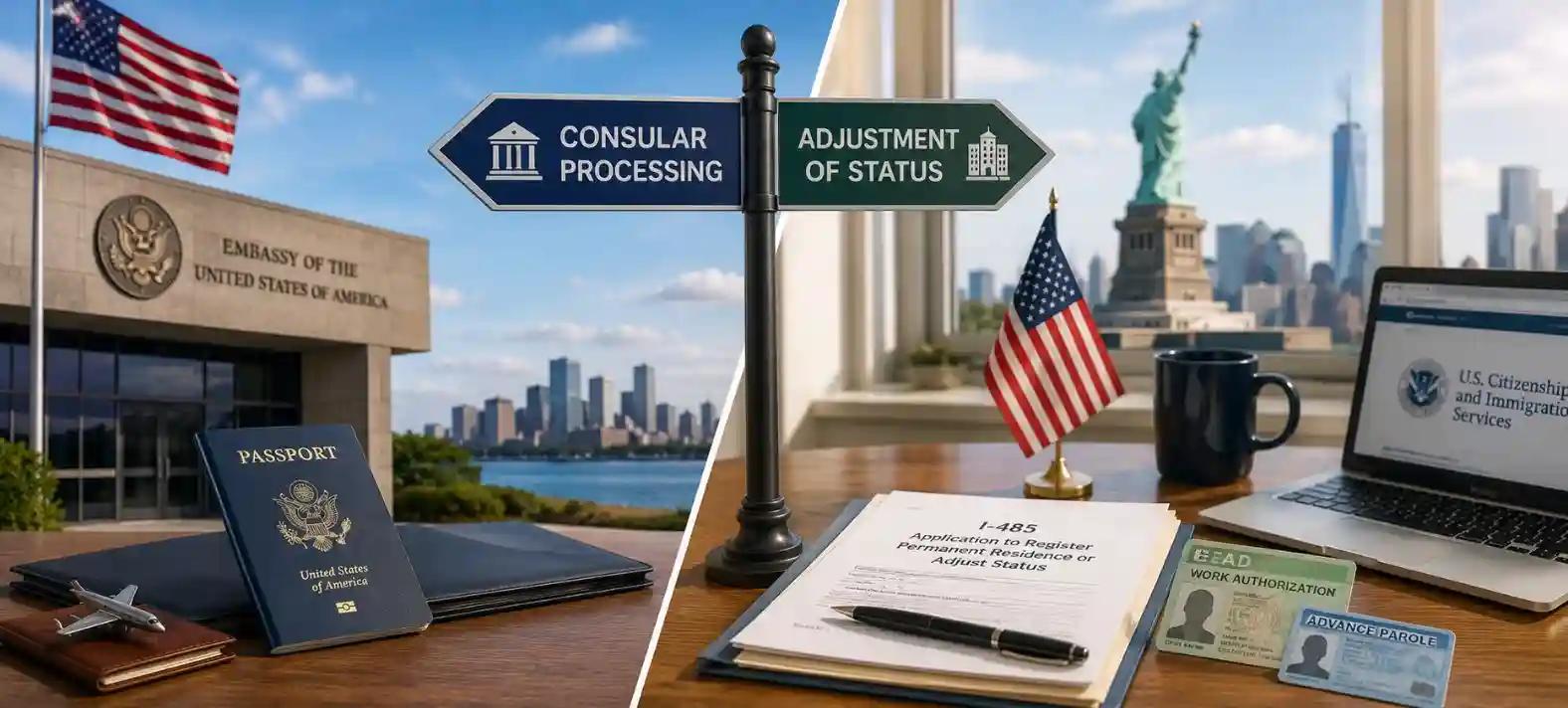
The main difference between consular processing and adjustment of status is where you complete your green card process. Consular processing happens through a U.S. embassy or consulate abroad, while adjustment of status happens entirely within the United States through USCIS.
Understanding this basic distinction is the first step toward figuring out which pathway applies to your situation. At Robinson Immigration Law, we regularly help professionals and entrepreneurs. And other applicants evaluate their green card strategy based on their immigration history, goals, and long-term plans.
How Does Consular Processing vs. Adjustment Of Status Work For H-1B Holders?
For H-1B holders pursuing EB-1A, EB-2 NIW, or O-1A, the choice between consular processing and adjustment of status affects not just where the case is processed. But how you maintain status while it’s pending.
For many professionals pursuing a transition from H1B to green card status, the choice between adjustment of status and consular processing can significantly affect travel flexibility and employment planning.
Applicants who file for adjustment of status may keep H-1B status if they continue working under H-1B, or they may later choose to work using an EAD if they receive one. Applicants who plan to use consular processing need to maintain their existing status carefully in the U.S. or abroad until the immigrant visa is issued, since consular processing does not provide interim work authorization. Reviewing consular processing vs. adjustment of status timing with an attorney before filing can help avoid status and travel issues.
Who Is Eligible For Each Option?
Eligibility for consular processing vs. adjustment of status depends on where you’re located, how you entered the United States, your current immigration status, and whether you’ve had any immigration violations. Not every applicant can choose between the two.
Adjustment of status generally requires physical presence in the United States and inspection and admission or parole, subject to category-specific exceptions. In many cases, applicants must have maintained lawful status, although important exceptions apply, including for certain immediate relatives and other special categories.
Consular processing is generally used by applicants who are outside the United States or who are not eligible to adjust status. According to USCIS, departing the United States after accruing more than 180 days of unlawful presence can trigger a 3- or 10-year bar, depending on the amount accrued and the person’s circumstances.
Key Differences Between Consular Processing And Adjustment Of Status
Both paths lead to a green card, but the steps to get there are different.
Key Takeaways
- Eligible applicants can apply for a green card through adjustment of status without leaving the United States. While applicants complete consular processing through a U.S. embassy or consulate abroad.
- Adjustment of status may allow eligible applicants to request an EAD and Advance Parole while the case is pending, whereas consular processing does not.
- Consular processing time and adjustment of status timelines both vary based on visa availability, government workload, and the facts of each case, so neither option is consistently faster.
- The best option depends on your eligibility, current immigration status, and individual circumstances rather than a single advantage or disadvantage.

What Are The Advantages And Disadvantages Of Each Process?
Neither pathway is inherently better. The right choice depends on your eligibility, immigration history, and how much you value staying in the U.S. versus your specific timeline and cost considerations.
Consular processing may be the only option for applicants who are ineligible to adjust status, and it can be faster in some cases depending on visa availability and consular workload. Government fees vary by category and should be checked against current USCIS and US Department of State fee schedules.
However, it requires completing the process abroad, may trigger reentry bars for applicants with prior unlawful presence, and does not provide interim work authorization. Consular processing time is difficult to predict in advance, since it depends on NVC scheduling and individual consulate workload rather than a fixed government timeline.
Adjustment of status allows eligible applicants to remain in the United States throughout the green card process and may provide an EAD and Advance Parole while the application is pending.
On the other hand, it has stricter eligibility requirements, and processing times vary based on USCIS workload and visa availability. You should also confirm government filing fees against the current USCIS fee schedule, since fees vary by category and change periodically.
How Robinson Immigration Law Helps With Your Green Card Strategy?
Choosing between consular processing and adjustment of status is a strategic decision, not a formality. At Robinson Immigration Law, we look beyond the application itself, reviewing your immigration history, current status, professional goals, and long-term plans to help identify a strategy tailored to your circumstances.
Whether you’re exploring an employment-based green card, transitioning from a temporary visa, or comparing different immigration options, our team helps you understand the requirements, risks, and opportunities involved.
FAQs About Consular Processing vs. Adjustment Of Status
2. Is Consular Processing Harder Than AOS?
Not harder, but different in risk. Consular processing requires international travel and offers no interim work authorization, and a denial abroad can be harder to challenge; the available options depend on the reason for the refusal.
3. Is Consular Processing Faster Than I-485?
It depends on your category and location. Consular processing can bypass USCIS field office backlogs in some cases, while adjustment of status (filed on Form I-485) timelines depend on local USCIS office demand. Neither path is consistently faster across the board.
4. What Is The Difference Between Consular Processing And AOS?
Consular processing is completed through a U.S. embassy or consulate abroad, and applicants must be outside the U.S. for the final steps. Adjustment of status is completed entirely within the U.S. through USCIS, letting eligible applicants stay in the country and potentially work and travel while their case is pending.
5. How Long Does Consular Processing Take For A Green Card?
Timelines vary by visa category, country of chargeability, and consulate workload. Rather than relying on a fixed estimate, check current Department of State processing data for your specific consulate or ask your attorney for a timeline based on your case.
Conclusion
Choosing between consular processing and adjustment of status is ultimately about selecting the path that fits your specific circumstances. The right strategy depends on where you are, your immigration history, and your long-term goals not a one-size-fits-all approach.